Phase one
Arrival without performance
The opening days are intentionally light. Residents tour the recording rooms, edit suites, screening spaces, equipment library, trails, and shared kitchen. They describe what they brought, but they are not expected to defend it. The first private session is usually spent reviewing material rather than changing it. This prevents the sudden burst of anxious productivity that often follows travel.
Each resident writes a one-page field note answering three questions: What continues to feel alive in the project? What has become heavy or repetitive? What decision has been postponed? Those notes remain private unless the resident chooses to share them.
Phase two
Protected production
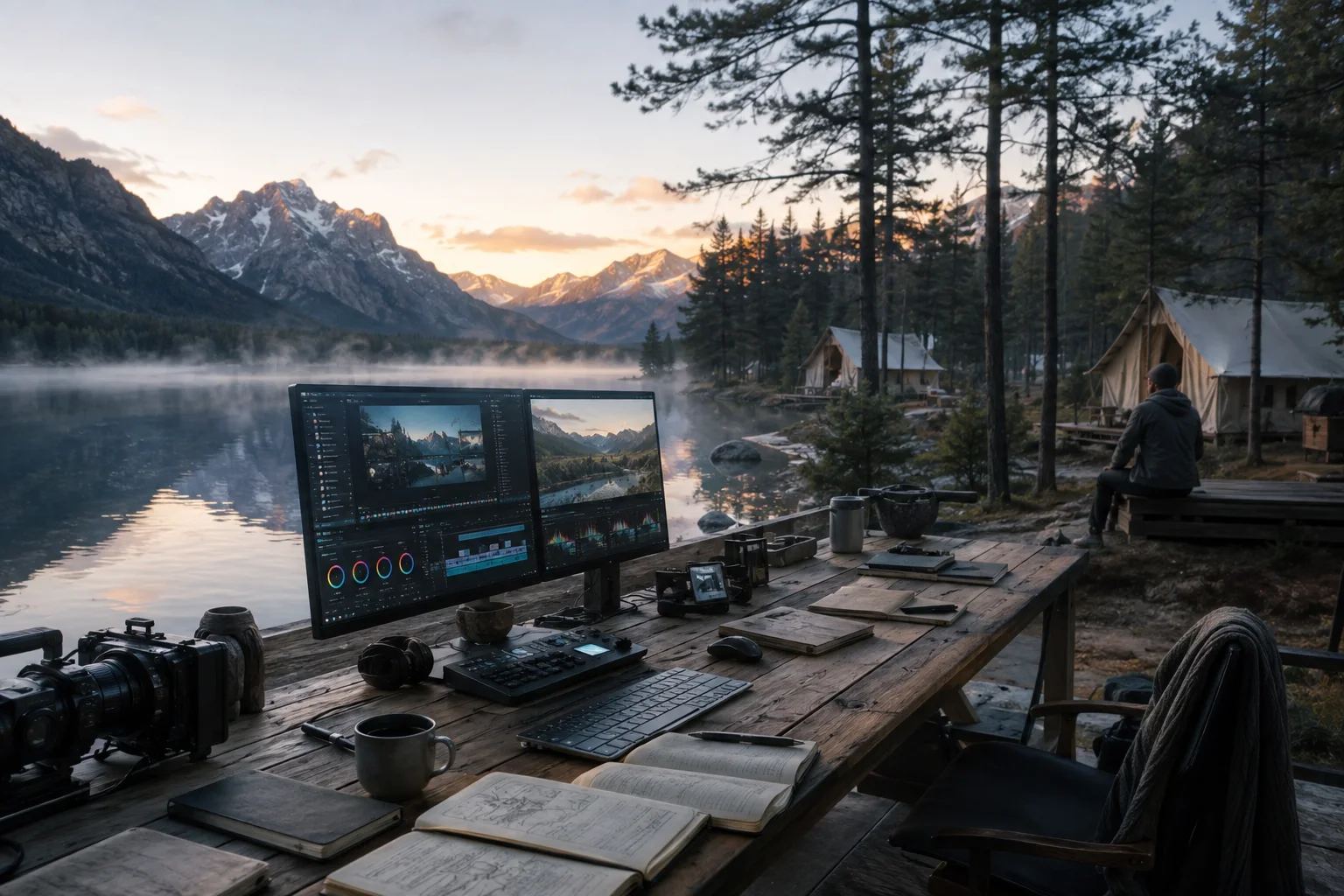
Once a working rhythm has been chosen, the schedule becomes quieter. Meetings are limited, meals remain flexible, and long blocks of time are treated as the main resource. A filmmaker might spend three mornings rebuilding a sequence before showing it to anyone. A podcaster may listen through raw interviews while walking. A writer might move between the library, lake bench, and a small room with no internet connection.
Technical support is available during a daily open bench. It can include microphone placement, color-management questions, storage planning, transcription workflows, projection tests, or simply a second person checking whether an idea can be understood.
Phase three
Useful exchange
Sharing is optional and specific. Instead of asking whether a piece is good, the resident identifies the kind of response that would help. They may ask where attention drops, whether a transition feels earned, what remains confusing, or which image continues to echo after the screening. This keeps feedback connected to the maker’s real decision.
The closing day is not treated as a premiere. Residents archive their work, duplicate essential files, record a short account of what changed, and define the next manageable step. Leaving with a durable process matters more than leaving with a polished object.